About
I became a scientist because I was curious. I stayed because science alone wasn't enough.
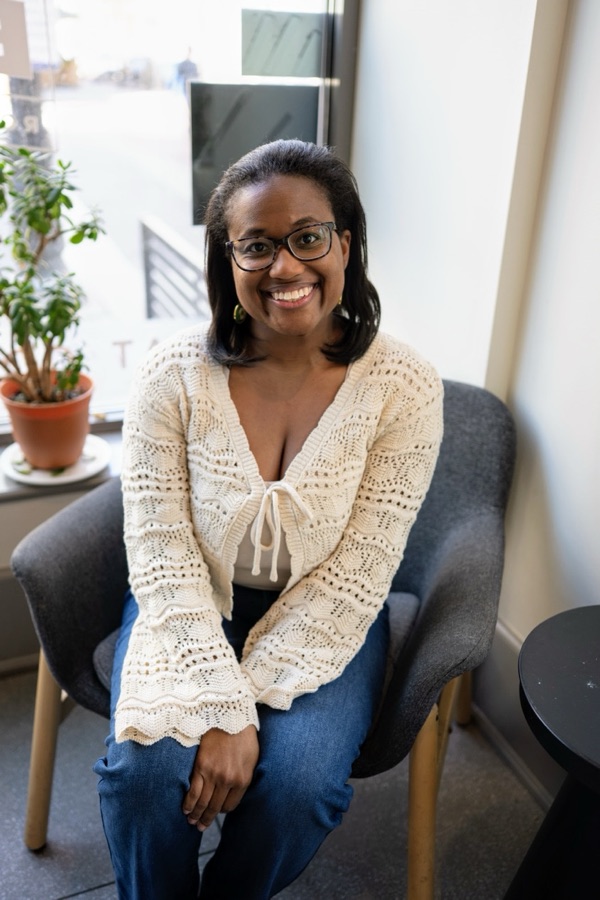
I grew up as the daughter of a pastor and an educator. On Sundays, I watched my father stand in front of a room full of people — different ages, different circumstances, different amounts of certainty about why they'd come — and reach nearly all of them. Not by changing who he was for each person, but by meeting them exactly where they stood. His example taught me that truth, delivered with real care, can feel universal. That service means finding people where they are, regardless of status or circumstance, and helping them feel seen.
I didn't set out to build a career around that lesson. I became a scientist because I was curious — about ragweed and pollen counts, about why some vacant lots in Detroit produced more allergens than others, about the small, measurable things that shape a neighborhood's air. That curiosity took me to Harvard Forest, into peer-reviewed journals, onto conference stages before I was thirty.
I stayed in conservation for a different reason. Somewhere in the data and the fieldwork, I saw what science alone couldn't touch: exclusion, disinvestment, institutional harm, unequal access to the land and water and decisions that shape a neighborhood's future. A well-designed study doesn't repair a community's trust in the people who study it. That gap is where my work actually lives now — as a bridge between science, institutions, faith communities, and the neighborhoods those institutions are supposed to serve.
“I grew up watching my father reach people in a way that made truth feel universal. His example taught me to meet people where they are, regardless of status or circumstance.”
Motherhood changed the shape of that work without changing its center. It made everything more urgent — my daughter will inherit whatever version of this world we leave behind, and I don't have the luxury of treating environmental repair as an abstraction. But motherhood also did something I didn't expect: it challenged the model of service I inherited.
I grew up around a kind of service that asked everything of the person giving it. I don't want to build a career, or a life, on that model. I want to continue the legacy of service I inherited without believing that meaningful work must come at the expense of the people closest to me.
So that's the question I'm actually living inside right now: how to build a life and a career that hold justice, ambition, family, service, pleasure, curiosity, and rest — together, not in competition with each other. I don't have it fully worked out. I'm not sure anyone does. But I'd rather build in public, with the people who are asking the same question, than pretend I arrived at the answer alone.
Beyond the bio
Some of the smaller, truer things.
I keep faith as a daily practice more than a Sunday one — it shows up in how I start a morning, not just where I sit on a weekend. I make my coffee with something close to ceremony, and I've never once regretted a long walk, even the ones that started as an escape and ended as a reckoning.
I come from a family that holds onto tradition the way other families hold onto photographs — recipes, rituals, the specific way we mark a season changing. I want to keep building that kind of rhythm for my own daughter, and I think often about the lake house my family talks about one day building: less a property than a fixed point on the map that everyone finds their way back to, year after year, generation after generation.
I read my chart the way some people read a horoscope in the newspaper — less for prediction, more for language. It gives me words for patterns I already sensed but hadn't named. And I will pick a real conversation, the kind that goes somewhere uncomfortable and useful, over small talk almost every time.
For media & event organizers
A short bio.
Tiffany Carey Jones is an environmental scientist and community-centered conservation leader based in Detroit and the Great Lakes region. Her published research on urban ragweed populations and pollen exposure — conducted through the University of Michigan and Harvard Forest — drew national coverage from outlets including Smithsonian, CityLab, and the Detroit Free Press. She is a Brower Youth Award winner, a NAAEE 30 Under 30 honoree, and a Harvard Forest program alumna.
For the past decade, her work has centered on building programs and partnerships — including faith-based greening initiatives connected to the National Wildlife Federation's Sacred Grounds program — that help communities historically excluded from environmental decision-making claim a rightful role in shaping it. She is the co-host of Moms Who Pause, a podcast for mothers navigating the pause points of career and identity, and is currently developing a community for women and mothers working in conservation and environmental fields.
Want the fuller picture?
See how this shows up in the work, or invite Tiffany into a conversation directly.