The work
Four ways I show up.
Conservation is one of the ways I explore care, justice, community, and belonging — not the whole of it. Here's what that actually looks like in practice.
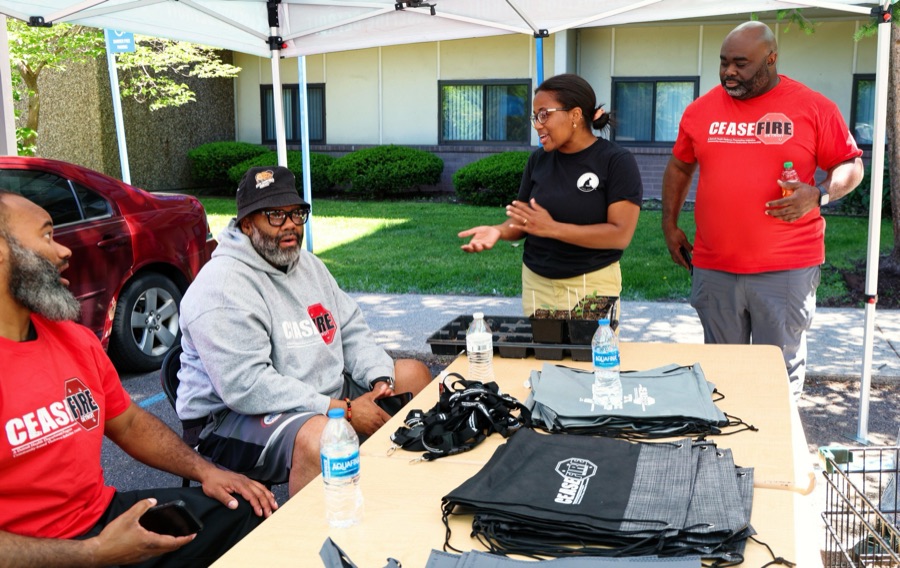
01 · Community-centered conservation
Trust before programming.
I design programs and partnerships that connect communities historically excluded from environmental work with land, water, wildlife, policy, storytelling, and decision-making. That starts by meeting communities where they are — not where a grant timeline or a strategic plan assumes they should be.
What does it mean to invite a community into environmental work when keeping the lights on is a more immediate concern? That tension is real, and I don't pretend it away. It means recognizing competing survival priorities before proposing a project. It means acknowledging, out loud, the harm environmental institutions have caused in disinvested neighborhoods — displacement dressed up as green space, decisions made about a block by people who've never walked it. Repair has to come before programming, or the programming doesn't hold.
In practice, this looks like designing with communities instead of for them, and helping national organizations show up responsibly in local places instead of parachuting in with a template. In Detroit and other disinvested communities, that often takes the shape of gardens and green infrastructure — projects that do real ecological work while also functioning as something more human: proof that a neighborhood can decide something together and see it through. A garden can represent hope and collective accomplishment that has very little to do with its square footage.
02 · Faith, nature, and belonging
Where stewardship and gathering meet.
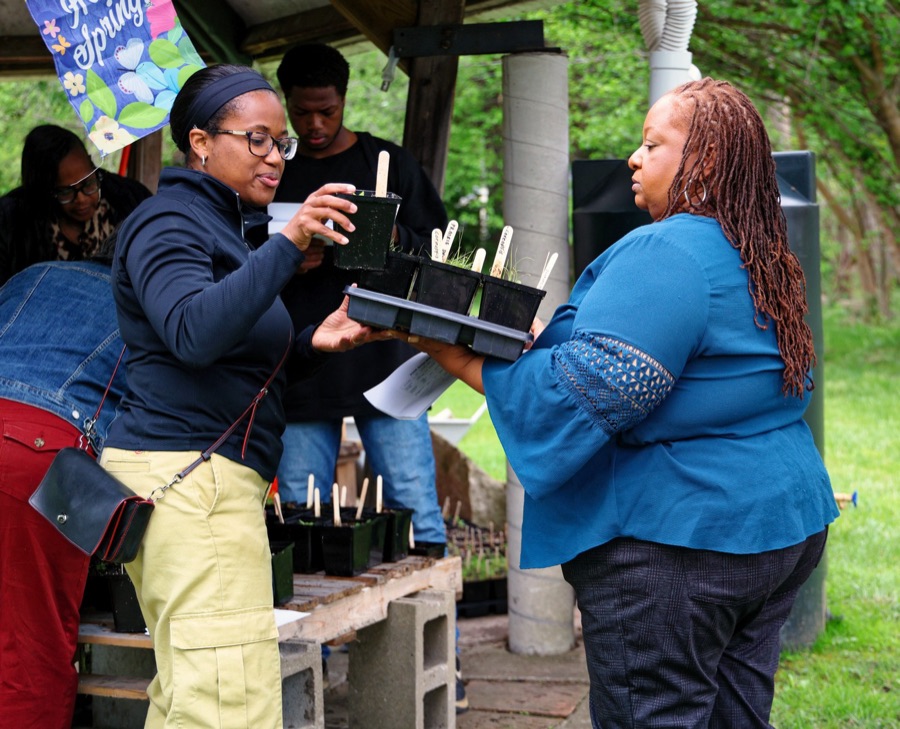
Some of my most sustained work has been with churches, mosques, synagogues, and other faith communities — congregations that own land, gather people weekly, and are often already doing the work of care that conservation tries to name. That work connects to the National Wildlife Federation's Sacred Grounds program, which I've helped bring into Detroit congregations.
Faith communities are a natural, underused partner in environmental work. A rain garden on church property does real ecological work — managing stormwater, lowering water costs, creating wildlife habitat — while also becoming a place for healing, gathering, and spiritual connection. It builds neighborhood trust in a way that an outside institution, on its own, usually can't.
I want to be clear about what I am and am not in this space: I'm drawing from lived experience, from years of program leadership, and from growing up as a pastor's daughter — not presenting myself as a theologian. What I bring is the ability to translate between a congregation's priorities and an environmental institution's, and to help each one trust that the other is showing up in good faith.
03 · Careers and equity in conservation
Staying in the field is its own skill.
More than a decade into this career, I've watched talented people — often the exact people the field says it wants more of — leave conservation entirely. Not because the work stopped mattering to them, but because the field rarely tells you how thin the ground actually is: unclear paths in, uneven representation once you're inside, salaries that assume you're either independently supported or willing to sacrifice financial stability for mission.
Mission-driven work carries an unspoken expectation that caring about the work and caring about compensation are in conflict. They aren't. I want salary transparency, real mentorship, honest interview preparation, and support for the people navigating career pivots, returns after caregiving leave, funding cuts, and the kind of covert discrimination that doesn't show up in an exit interview but shows up in who gets promoted.
This is also where representation stops being an abstract value and becomes a practical one: who stays in the field shapes what the field prioritizes next. I'm building toward more structured resources here — advising, mentorship, panels, and a community built specifically for people who want to stay.
04 · Motherhood and sustainable leadership
Bringing the work home, on purpose.
Motherhood is both a generational lens and a professional one. My daughter will inherit whatever version of this world we build, which makes the work feel less optional and more immediate. I want her exposed early to the full range of what an environmental career can look like — not just the version she'd see in a textbook — and I look for real ways to bring her and other kids into nature and community experiences directly, not as an afterthought.
But motherhood has also forced me to interrogate a pattern I inherited: the idea that devotion to service is proven by how much of yourself it costs you. I don't believe that anymore. Burnout isn't evidence of commitment. Serving communities without abandoning your family, or yourself, isn't a lesser version of the work — it's a precondition for doing it well over a career instead of a few intense years.
That's the honest version of being a working mother in conservation: ambitious about the work, protective of the people at home, and done pretending those two things are naturally at odds.
Ways to engage
Bring this work into your room.
-
Speaking and panels
Keynotes, moderated conversations, and panels on any of the four areas above.
-
Program strategy and advisory conversations
For organizations building community-centered or faith-based greening programs.
-
Career and student conversations
For students and early-career professionals navigating a path into the field.
-
Media and podcast interviews
On any of the above, or as a guest on your show.